


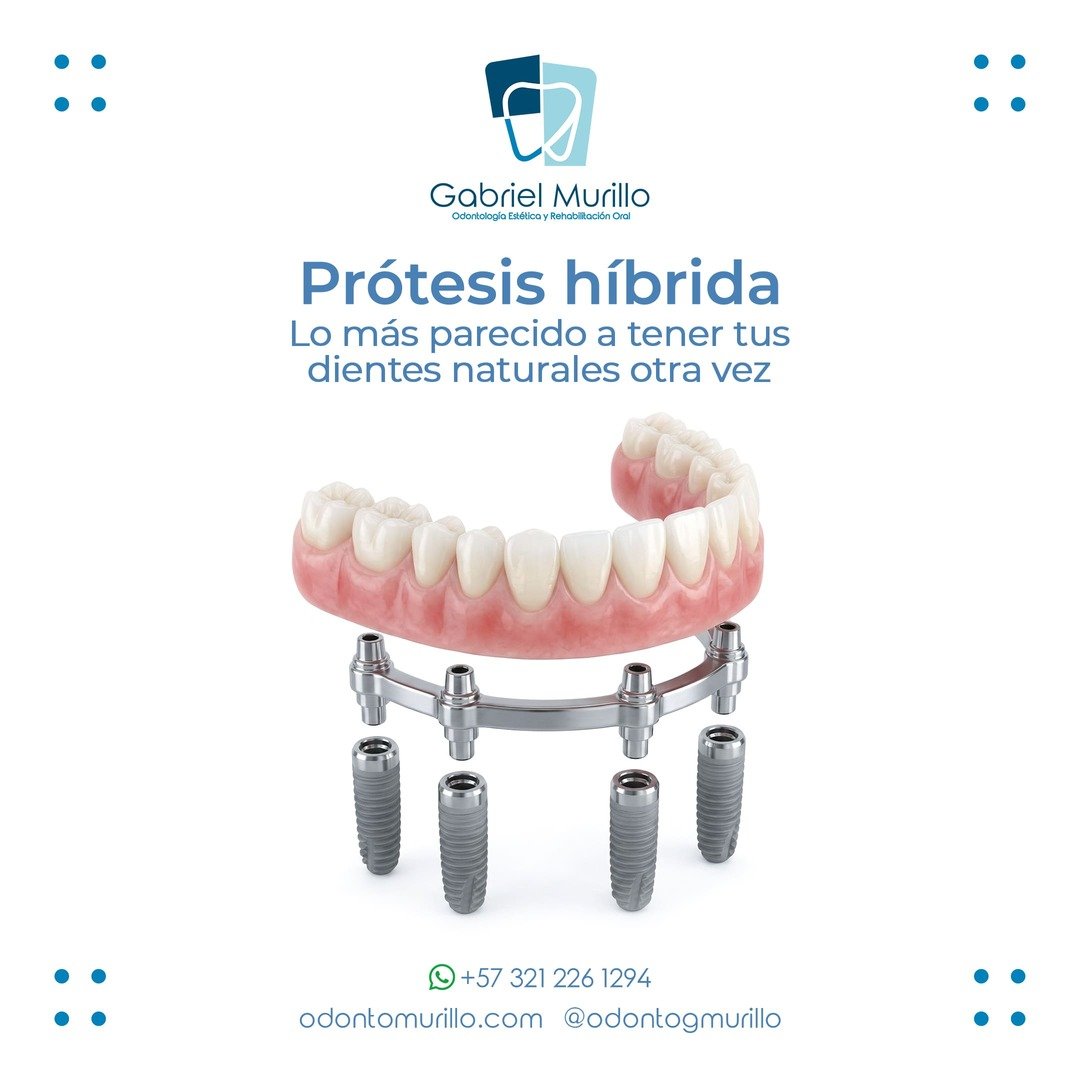
Imagine being able to bite into a crisp apple without fear. Imagine laughing out loud without bringing your hand to your mouth for fear of your teeth moving. Imagine tasting the real flavor of your favorite foods again because you no longer have plastic covering the roof of your mouth. For many patients in Quindío who have lost their teeth, this seems like a distant dream. The reality of traditional removable dentures (commonly known as “false teeth”) is often uncomfortable: bad-tasting adhesives, gum sores, and constant insecurity in social situations.
But at Dr. Gabriel Murillo’s Clinic, we have life-changing news: you don’t have to resign yourself to that reality.
The Hybrid Prosthesis is the gold standard in modern oral rehabilitation. It is the ultimate solution for those looking for fixed, aesthetic, and functional teeth. In this article, we explain why this treatment is considered the closest thing to recovering your natural teeth that science can offer today.
What exactly is a hybrid prosthesis?
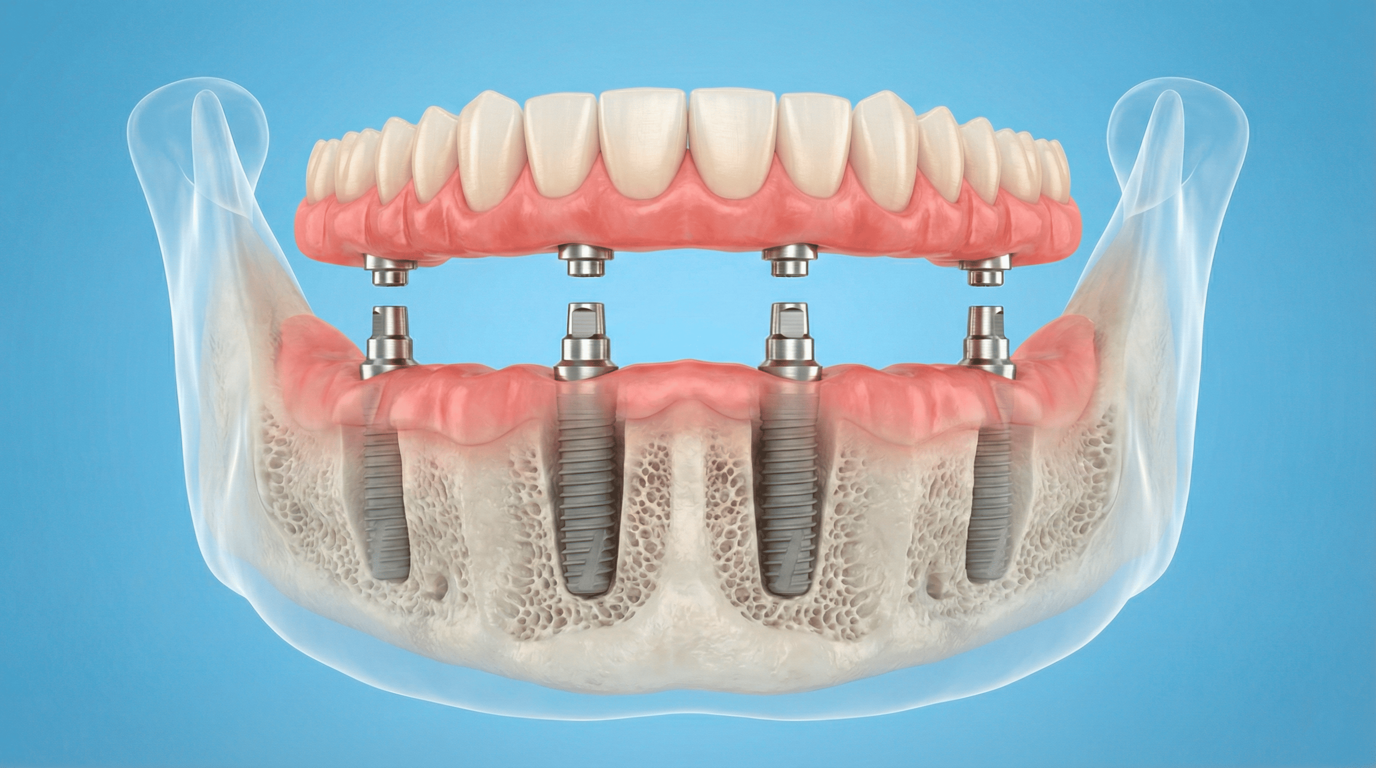
A hybrid prosthesis is a complete dental structure that is permanently fixed onto dental implants (usually 4, 5, or 6 implants per arch).
Why is it called “Hybrid”? The term refers to the combination of materials and functions. It is not a removable denture that you take in and out, but neither is it a traditional porcelain bridge that goes over your natural teeth. It is an engineering fusion that replaces two things you have lost:
Your teeth: The white, aesthetic part.
Your supporting tissue: The pink part (gum and bone) that has reabsorbed over time.
The key feature you need to understand is that it is screw-retained. This means it is attached directly to the implants using precision micro-screws. You cannot take it off. Only the dentist can remove it in the office for maintenance. For you, in your daily life, it works, feels, and looks as if they were your own teeth.
The perfect fusion: Metal/Zirconia + Gingival aesthetics
The success of the hybrid prosthesis lies in its composition. At Odontomurillo, we use cutting-edge materials to guarantee durability and a natural look:
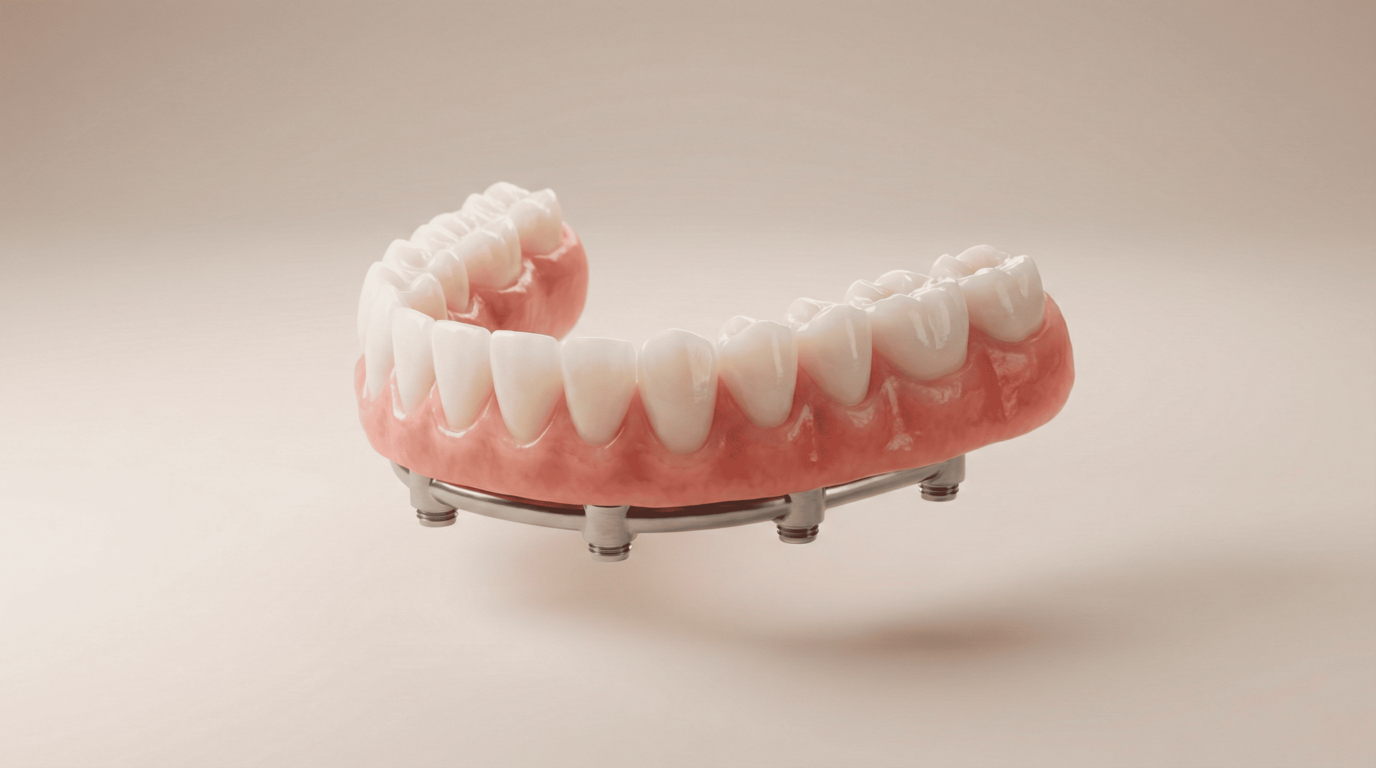
The Bar or Internal Structure: This is the “skeleton” of the prosthesis. It can be made of metal (Titanium or Cobalt-Chrome) or, in the most modern and aesthetic versions, Zirconia. This bar connects the implants to each other, creating a splinting effect that provides unmatched strength. It is what allows you to bite down hard without breaking the prosthesis.
Gingival Aesthetics (Pink Gum): Many patients ask, “Why does it have a pink part if I just want teeth?” This is the magic of the hybrid. When you lose teeth, the bone reabsorbs and the gum recedes. If we only placed white teeth, they would be extremely long and unsightly (resembling horse teeth). The pink part of the prosthesis replaces that lost bone and gum, providing support for your lip so it doesn’t look sunken in and restoring the natural proportion of your smile.
Hybrid vs. Overdenture: Understanding the differences
It is very common to confuse these two terms during consultations. Both use implants, but the patient experience is completely different. Here we clarify it so you can make the best decision.
Fixed vs. Removable: What does the modern patient prefer?
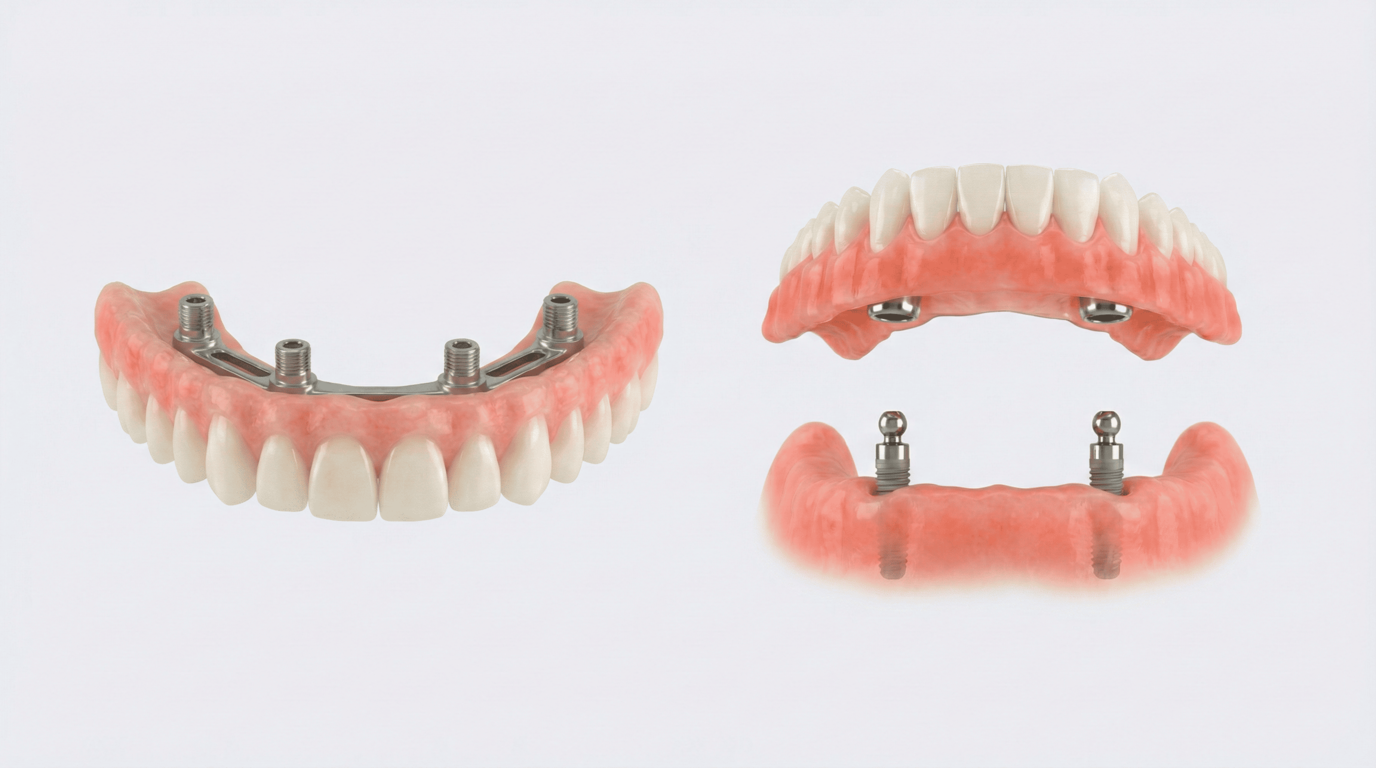
An Overdenture is a “mobile” prosthesis. It attaches to the implants using attachments (like snap buttons or clips). Although it is much more stable than a conventional denture, it is still removable. You have to take it out every night to sleep and to clean it after eating. It has a slight natural micro-movement when chewing.
The Hybrid Prosthesis, on the other hand, is FIXED.
Patient psychology: The modern patient in Armenia does not want to be seen “without teeth,” not even in the privacy of their own bathroom. With the hybrid, you wake up with teeth and go to sleep with teeth. It becomes part of your body.
Security: There are no clips to wear out and no risk of it shifting when you sneeze or laugh hard. The feeling of integration is total.
If your priority is absolute comfort and forgetting you are wearing a prosthesis, the Hybrid is the winning choice. If you are on a tighter budget and accept something removable in exchange for stability, the overdenture is a great option.

What does it feel like to eat with a hybrid prosthesis?
This is undoubtedly the most important question. The main function of the mouth is feeding, and regaining the pleasure of eating is the greatest gift of this treatment.
Regaining 100% of your chewing power
With a conventional removable denture (without implants), a patient only regains between 10% and 20% of their original bite force. This forces you to avoid fibrous meats, nuts, or hard breads. Basically, it condemns you to a soft diet for life. With the Implant-Supported Hybrid Prosthesis, because it is anchored to the bone, you regain practically 100% of your chewing power. The implants act like artificial roots that transmit force to the bone, stimulating it and keeping it alive. In practice, this means you can order a steak at a restaurant again, bite into an apple, or enjoy pork rinds without the fear of your teeth moving or falling out.
Palate-free: Enjoy flavors all over again
One of the biggest drawbacks of traditional upper complete dentures is that they must cover the entire roof of the mouth (palate) to create suction and not fall out. The problem? The palate is full of taste buds and temperature and texture receptors. By covering it with acrylic, food “tastes like nothing” and the sensation of hot or cold is lost.
The upper Hybrid Prosthesis is horseshoe-shaped. It DOES NOT cover the palate. The roof of your mouth is completely free. This is a dramatic change in quality of life:
You can taste coffee, wine, and food again.
It improves your speech (you speak clearer because your tongue has room).
You eliminate the gag reflex caused by having plastic in your throat.
Maintenance and cleaning: How do I take care of my new fixed teeth?
Having fixed teeth comes with a responsibility: hygiene. Just as your natural teeth were lost due to bacteria, implants can get diseased (peri-implantitis) if not cared for. But don’t worry, at Odontomurillo we’ll show you how to do it easily.
The daily routine changes a bit. Since you can’t take your teeth out to brush them in your hand, you have to clean them in your mouth:
Normal brushing: With a soft toothbrush and non-abrasive toothpaste.
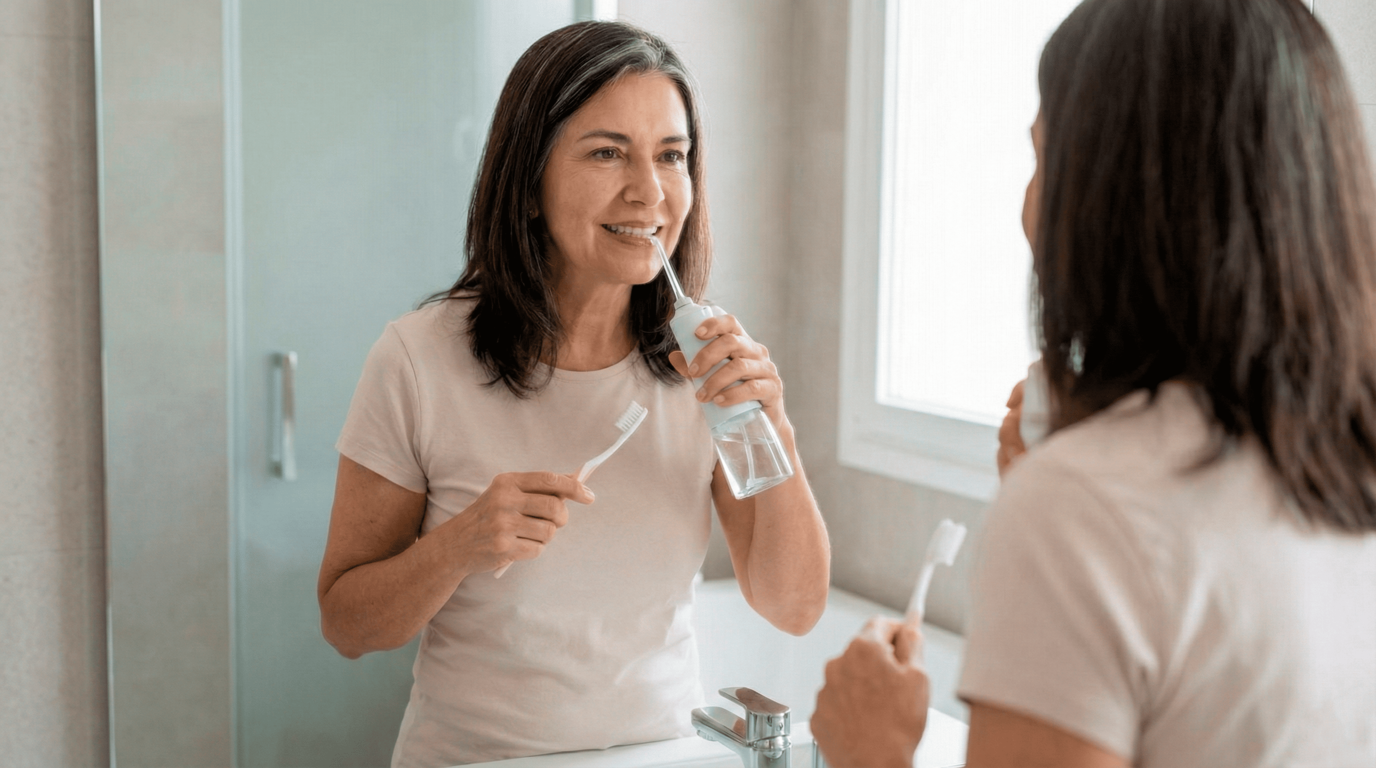
Water Flosser (Waterpik): This device is mandatory for hybrid users. It shoots a pressurized stream of water that cleans underneath the prosthesis, where a toothbrush can’t reach. It is your best ally.
Superfloss: A special type of dental floss with a stiff end and a spongy middle that slides between the implants and the gum.
The importance of an annual clinical prophylaxis
Even if you brush very well, professional “technical maintenance” is necessary. We recommend (and almost require) that our hybrid patients come to the clinic in Armenia once a year for a removal and maintenance appointment. During this appointment:
Dr. Murillo unscrews the prosthesis (a painless process).
We clean and disinfect the implants and the previously covered gum.
We place the prosthesis in an ultrasonic cleaner to make it look brand new.
We replace the clinical screws if necessary (to prevent fractures from metal fatigue).
We screw it back in and seal it.
This annual protocol guarantees that your investment will last for decades.
Oral rehabilitation success stories in Armenia
In our clinic, we have witnessed amazing transformations. Patients who came in covering their mouths when they spoke, suffering from depression and digestive issues because they couldn’t chew properly. After hybrid prosthesis treatment, the change is immediate:
Facial rejuvenation: By restoring the vertical dimension (the height of the bite) and lip support, wrinkles around the mouth are smoothed out. The face looks younger and more rested.
Social confidence: We see patients going out to dinner with friends again, smiling in photos, and speaking in public.
We don’t just sell teeth; we restore the quality of life you thought was lost.
Frequently Asked Questions
Here we answer the most common, specific questions about the Hybrid Prosthesis we get in the office:
The implants (the screws in the bone) are designed to last a lifetime. The prosthetic structure (the teeth) has a very high durability but can experience wear and tear. Metal-acrylic ones usually remain in perfect condition for 5 to 10 years before the teeth need to be replaced (keeping the same metal framework). Zirconia ones are much more resistant and durable, easily exceeding 15-20 years with proper care.
It is normal to have a minimal gap (called the hygiene space) between the prosthesis and the gum to allow for cleaning. Small food particles can get in, but that is why the Water Flosser (Waterpik) is essential, as it dislodges any residue in seconds. If the design is well-made, food shouldn’t bother you or cause bad breath.
Implant surgery is done under anesthesia and is painless. The placement of the prosthesis (screwing it in) does not hurt at all, as the implants have no nerve endings once integrated. You may feel some pressure, but no pain.
A great advantage of hybrids is that they are repairable. If you bite something extremely hard and fracture an acrylic tooth, we can usually repair it in the lab without having to make a completely new prosthesis.
The gold standard is usually 4 implants (All-on-4 technique) per arch. In some cases, if the patient has a very strong bite or very soft bone, we might recommend 5 or 6 implants to better distribute the force. Dr. Murillo will determine this using your 3D CT scan.
At first, you might notice a different sensation due to the weight (especially if it’s metal-ceramic), but your jaw muscles will adapt in a matter of days. Once in the mouth, it feels solid and firm, not “heavy.” Modern titanium and acrylic prostheses are quite lightweight.
Initially, yes, a little bit. Like any change in the mouth, the tongue needs to adapt to the new space. However, unlike complete dentures with a palate that heavily affect speech, adaptation with a hybrid is very fast (1 to 2 weeks). We will recommend reading out loud to speed up the process.
The Metal-Acrylic hybrid prosthesis is the standard option: excellent aesthetics, more affordable, and easier to repair, but the teeth do wear down over the years. The Zirconia (or porcelain) option is top-of-the-line: it doesn’t stain, it doesn’t wear down, it shines like a natural tooth, and it’s more expensive due to the CAD/CAM technology required to manufacture it. Both are excellent functional options.