


There comes a time in the lives of many people in Armenia and Quindío when they must face a difficult decision: how to replace lost teeth. Whether due to age, periodontal disease, or accidents, tooth loss is a reality that deeply affects self-esteem and health.
Generally, the options narrow down to two paths: the traditional removable denture (popularly known as “false teeth” or “plates”) and modern dental implants.
At first glance, the most obvious difference is the price. Removable dentures are considerably more affordable initially. This leads many patients to choose them “for the meantime” or to “save money.” However, as oral rehabilitation experts at Dr. Gabriel Murillo’s Clinic, we have a responsibility to explain what the fine print doesn’t say: the long-term biological and functional cost.
In this comparative guide, we will thoroughly analyze both options so you can make an informed decision, based not just on your wallet, but on your future well-being.
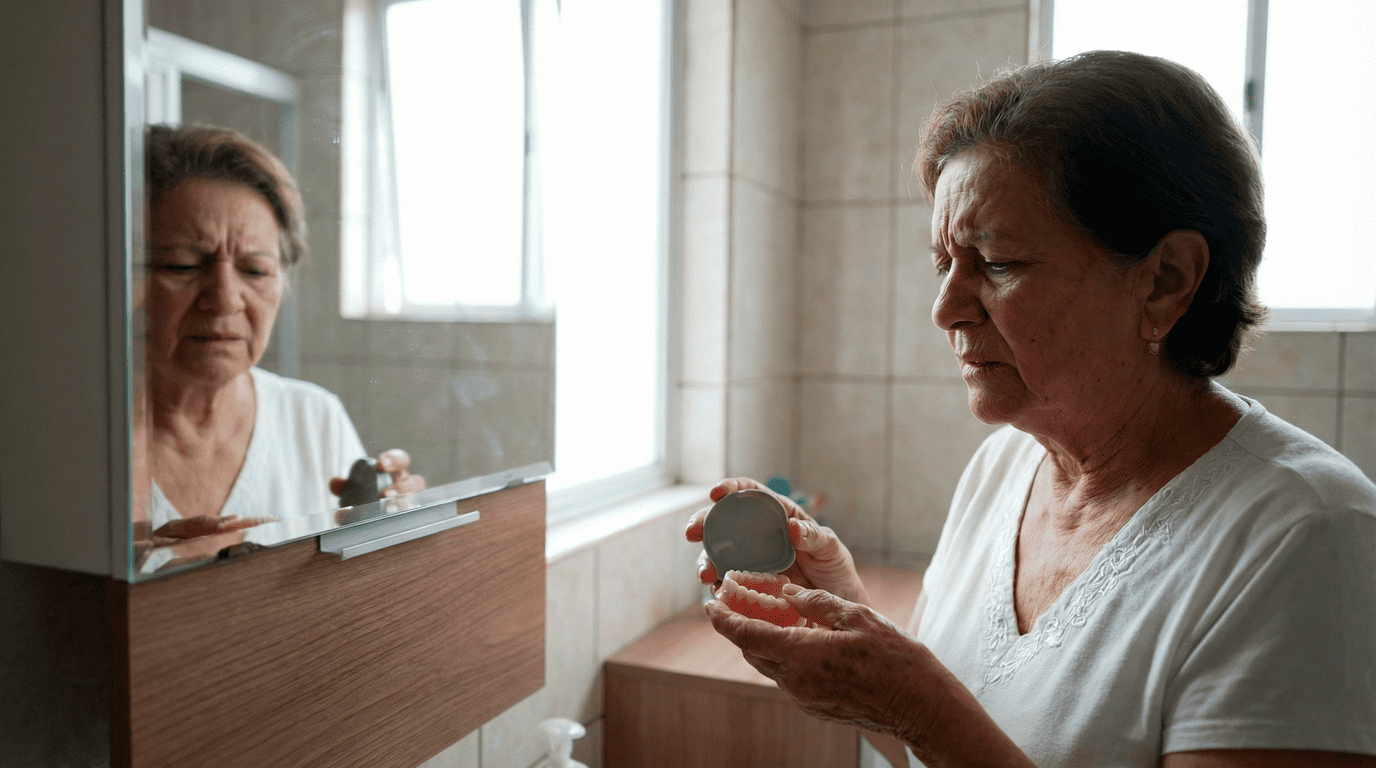
The problem with traditional “false teeth”
Removable dentures have been the standard solution for decades. They serve a basic function: they fill the gap and allow you to chew soft foods. But dentistry has advanced because the disadvantages of this system are severe and progressive.
The main problem with a prosthesis that “you take in and out” is that it does not replace the root of the tooth, only the crown (the visible part). And since there is no root, the body understands that this part of the jaw is no longer necessary.
Bone resorption: Why your face ages faster without teeth
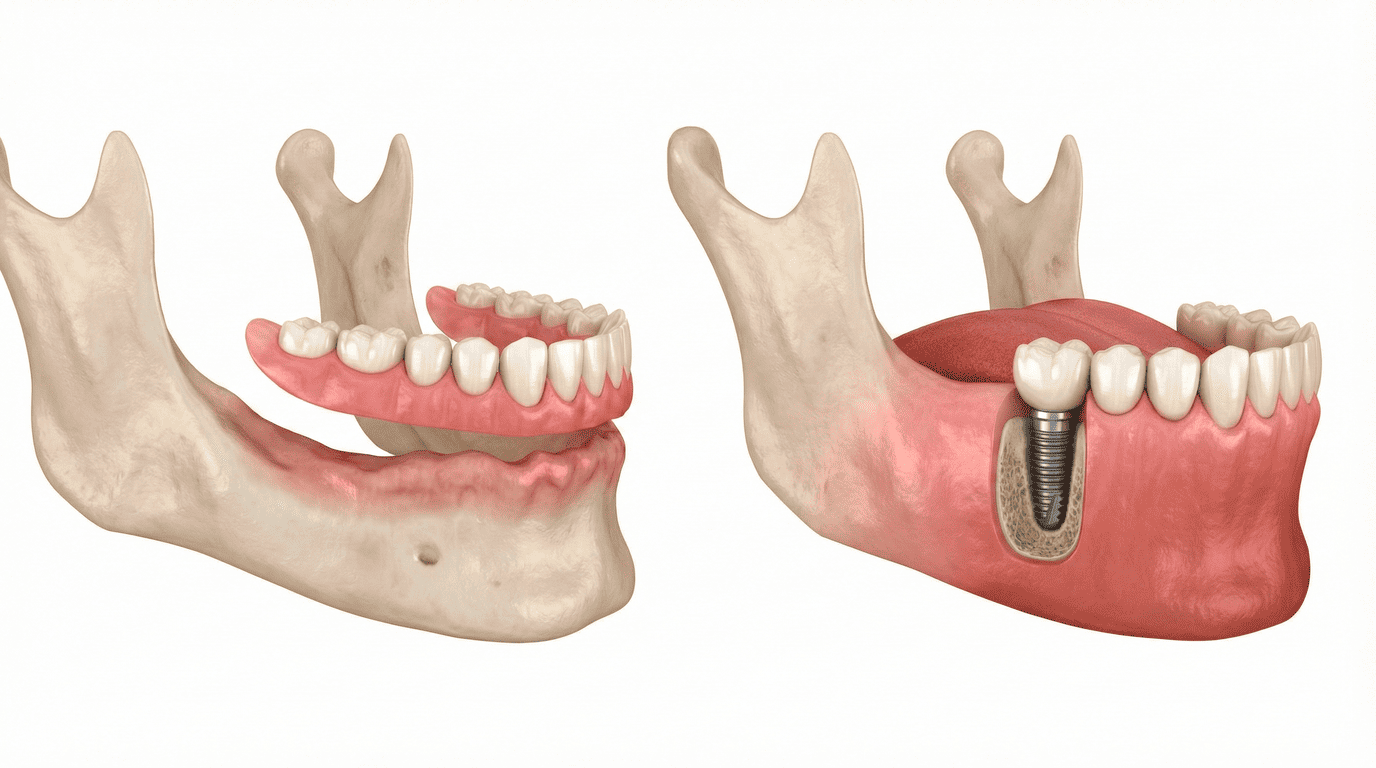
This is the most critical point and one that few patients know about. The maxillary bone is a living tissue that needs stimulation to maintain itself. When you chew with your natural teeth, the roots transmit force to the bone, keeping it dense and strong. When you lose your teeth and use a removable denture, that internal stimulation disappears.
Worse still, the denture crushes the gum from the outside. This accelerates a process called bone resorption.
The physical result? The bone shrinks.
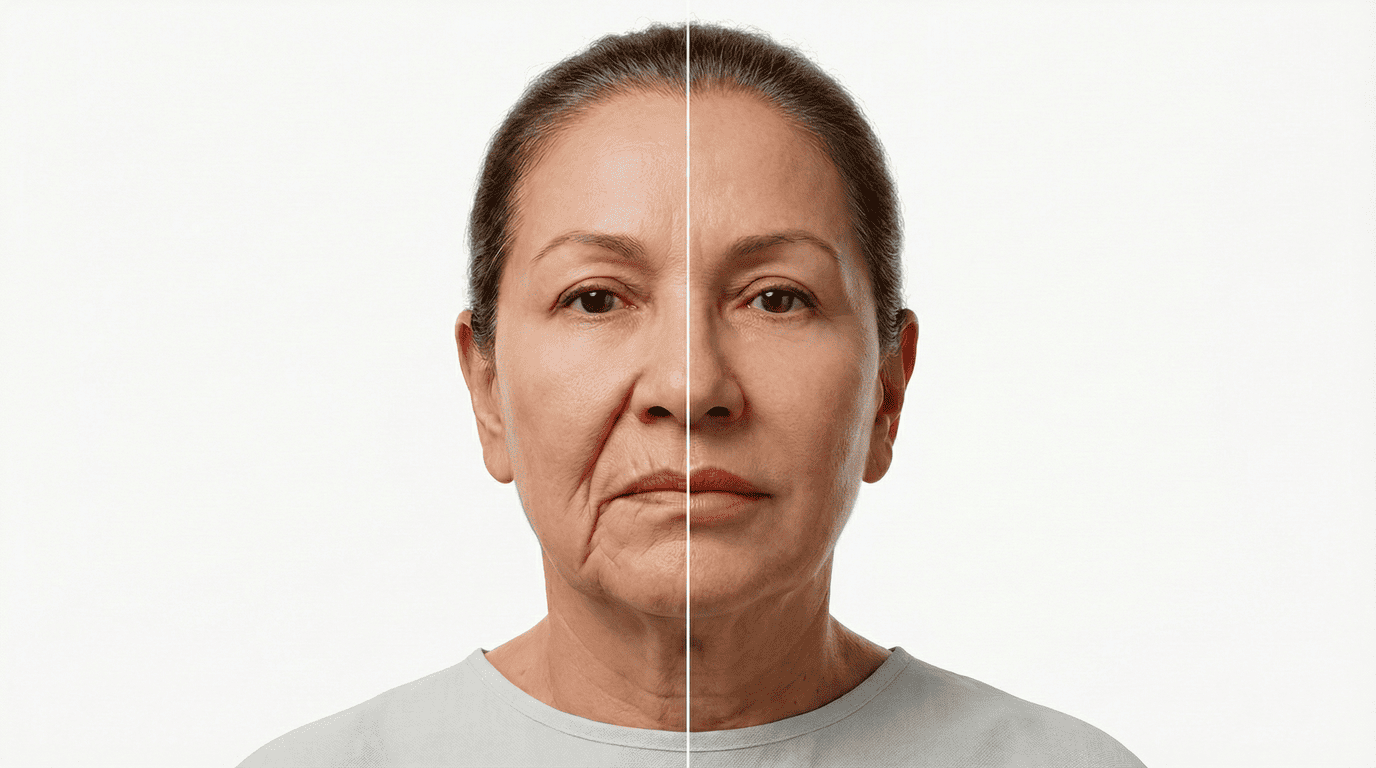
Premature facial aging: By losing bone volume, the lips sink inward, the chin projects forward (the so-called “witch’s profile”), and deep wrinkles appear around the mouth. A person without teeth or with long-term removable dentures looks much older than they are.
Insecurity when speaking and eating
Beyond aesthetics, there is functionality. Removable dentures are held in place by suction (on the palate) or metal clasps on other teeth. Over time, as the bone resorbs, the denture becomes loose.
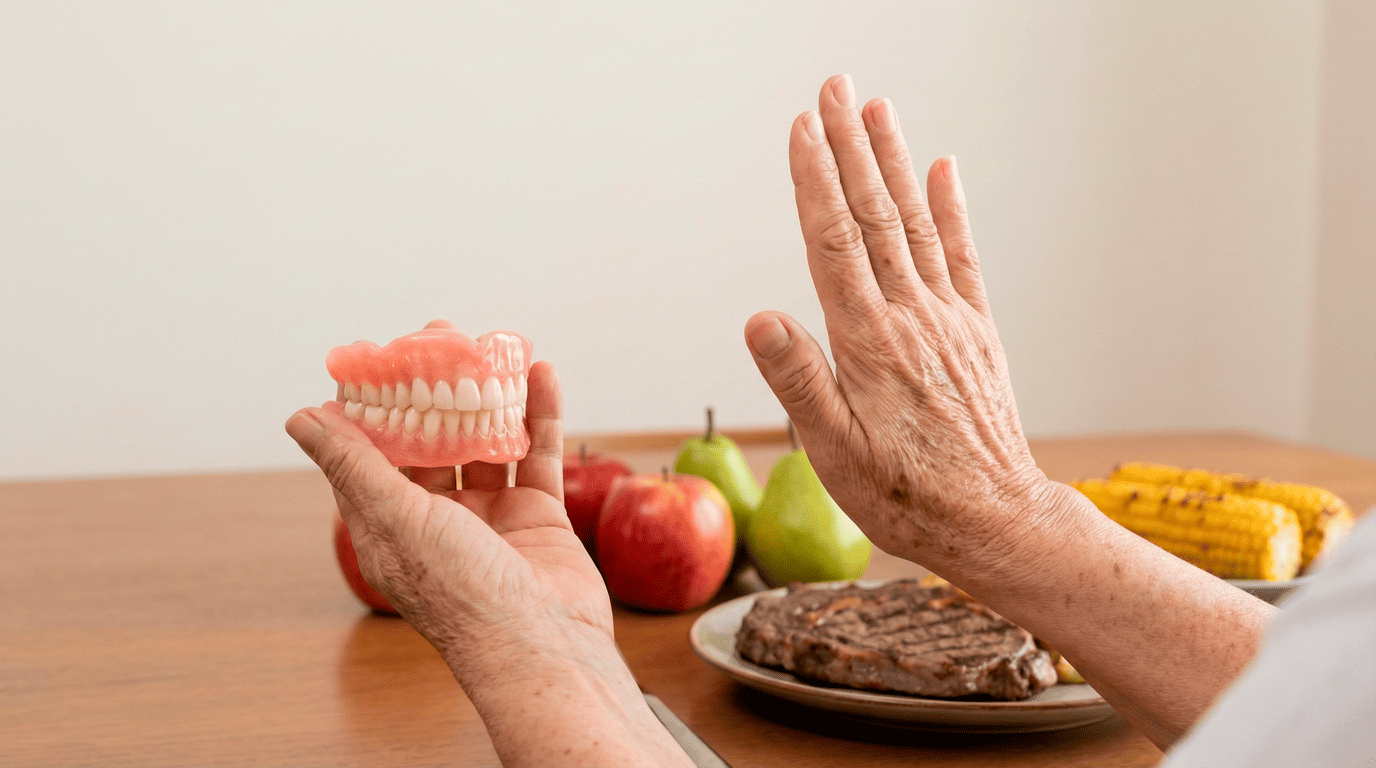
This creates highly stressful everyday situations:
Social fear: The constant fear that the denture will move, make noise (“clack-clack”), or fall out when laughing, coughing, or sneezing.
Dietary limitations: Forget about biting into an apple, eating corn on the cob, or enjoying a family barbecue. The chewing force with a removable denture is barely 20% of a natural bite.
The use of adhesives: Many patients end up depending on adhesives and creams (like Corega/Poligrip) that are messy, alter the taste of food, and represent an endless monthly expense.
Advantages of choosing Dental Implants over removable options
Dental implants are not just “expensive false teeth.” They are titanium screws inserted into the bone to fulfill the function of the natural root. This structural difference changes everything.
Guaranteed stability
Being osseointegrated (fused with the bone), the implant does not move. Period. This provides absolute stability.
The prosthesis that goes on top of the implant (whether it is a single crown, a bridge, or a complete hybrid prosthesis) feels like a part of you. There is no rubbing against the gums, no sores from poor fit, and no need for adhesives.
You can speak in public, cheer a goal, or kiss without the slightest worry that your teeth will shift.
Long-term durability (Investment vs. Expense)
This is where the concept of “cheap ends up being expensive” comes in.
Removable: A removable denture has a short lifespan (5-7 years). It stains, wears out, breaks if dropped while washing, and most importantly, it must be constantly relined (refitted) because your bone changes.
Implants: Dental implants are designed to last a lifetime. With proper hygiene and visits to Odontomurillo, it is a permanent solution. It is a one-time investment that pays off every day you enjoy your food and smile with confidence.
Furthermore, the implant stops bone resorption. By stimulating the bone again, you halt the premature facial aging associated with tooth loss.
Comparative table: Removable dentures vs. Implants
To make it clearer, we have prepared this direct comparison:
| Feature DOCX (Google Drive) | Removable Dentures (False teeth) DOCX (Google Drive) | Dental Implants DOCX (Google Drive) |
| Stability DOCX (Google Drive) | Low. They move and may require adhesives. DOCX (Google Drive) | Excellent. Fixed to the bone. DOCX (Google Drive) |
| Chewing Force DOCX (Google Drive) | 10% – 20%. Soft or minced diet. DOCX (Google Drive) | 90% – 100%. You can eat anything. DOCX (Google Drive) |
| Maxillary Bone DOCX (Google Drive) | Accelerates bone loss (atrophy). DOCX (Google Drive) | Preserves and stimulates the bone. DOCX (Google Drive) |
| Facial Aesthetics DOCX (Google Drive) | Can sink the lip and age the face. DOCX (Google Drive) | Maintains natural volume and support. DOCX (Google Drive) |
| Comfort DOCX (Google Drive) | Covers the palate (loss of taste). DOCX (Google Drive) | Free palate. Natural feeling. DOCX (Google Drive) |
| Lifespan DOCX (Google Drive) | 5-7 years (requires frequent adjustments). DOCX (Google Drive) | Indefinite / Lifelong (with care). DOCX (Google Drive) |
| Initial Investment DOCX (Google Drive) | Low. DOCX (Google Drive) | High. DOCX (Google Drive) |
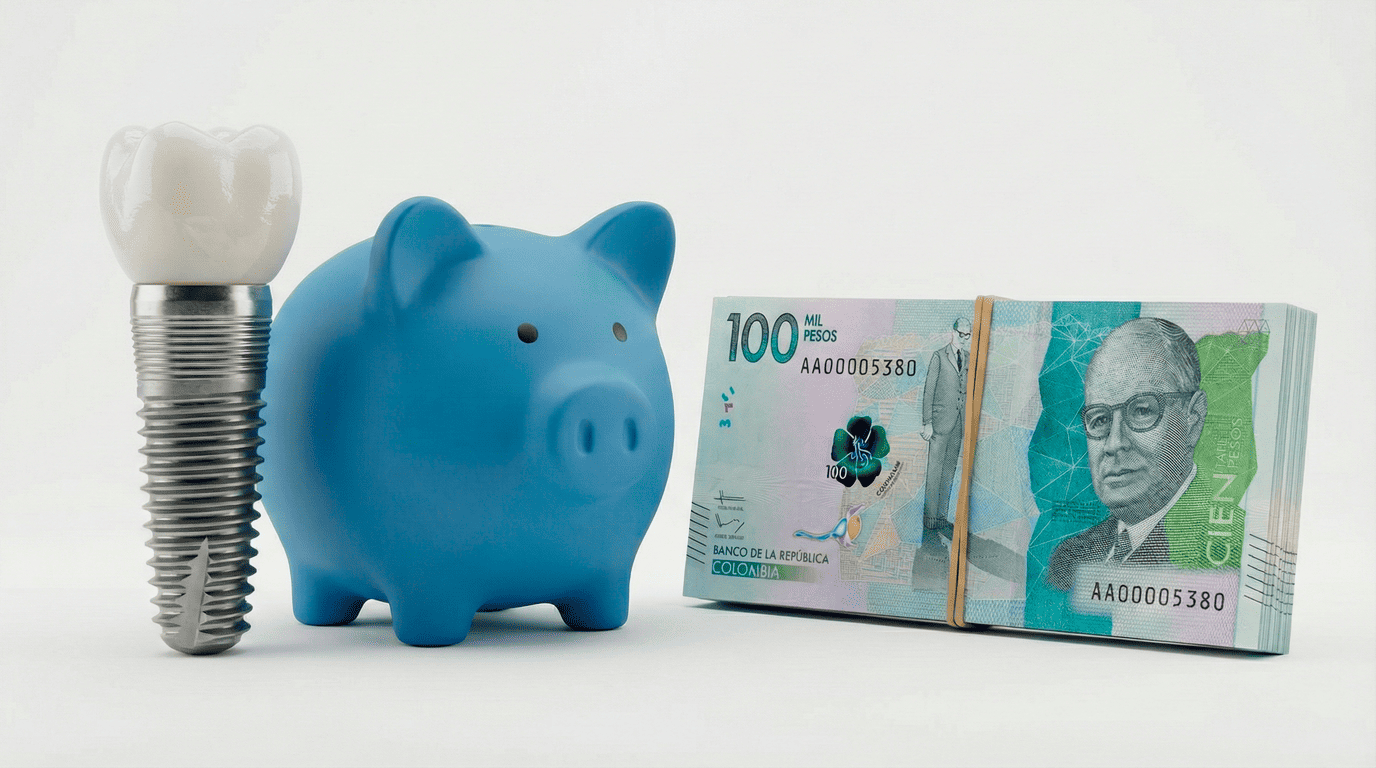
Why are implants more affordable in the long run?
Many patients in Armenia rule out implants because of the initial price. But let’s do the math over 20 years.
With a removable solution, you will have to:
Pay for the initial denture.
Pay for relines (adjustments) every 1 or 2 years because it gets loose.
Buy adhesive creams and cleaning tablets every month.
Pay for a completely new denture every 5 to 7 years.
Possibly pay for gastric medical treatments (due to not chewing food properly).
With implants, you make a strong initial investment, but the subsequent maintenance cost is minimal (annual cleanings). In the long run, the financial difference narrows, but the gain in health and happiness is incalculable. How much is it worth to you to be able to eat whatever you want for the rest of your life?
Schedule your assessment in Armenia and stop suffering with your dentures
You do not have to settle for a lower quality of life. At Dr. Gabriel Murillo’s Clinic, we are specialists in rescuing smiles. We understand that the financial factor is important.
That is why we invite you for an assessment where we will evaluate your case. Sometimes, intermediate solutions like an overdenture (removable but attached to 2 implants) can be the perfect balance between price and stability.
Come visit us in Armenia. Stop suffering with that wobbly denture and discover how modern technology can give you back your confidence.
Frequently Asked Questions
Here we answer the most common doubts of our patients who are at this crossroads:
In the vast majority of cases, yes. Even if you have lost bone due to the prolonged use of removable dentures, there are techniques such as “All-on-4” or zygomatic implants that allow us to rehabilitate even cases with little bone. We need a 3D CT scan to confirm it.
It is a common myth. The placement of implants is done under local anesthesia and is less traumatic than a tooth extraction. The postoperative period is usually very manageable with mild painkillers. Most patients say the next day: “If I had known it was so easy, I would have done it sooner.”
The traditional process takes about 3 to 6 months to allow the bone to fuse with the screw. However, in many cases we can apply “Immediate Loading,” placing temporary fixed teeth on the same day of surgery or the next day.
Yes. Unlike the removable denture, which is a foreign body resting on the gum, the implant transmits the sensation of pressure to the bone in a very similar way to a natural tooth. Furthermore, by not having a plastic palate, you recover the temperature and texture of food.
Generally, the same old denture is not used to attach to implants, since the structures are different. What we can sometimes do is use your old denture as a “temporary” while we manufacture the new permanent one over the implants.
Diabetes is not an absolute contraindication, as long as it is controlled. If your glucose levels are stable, you can receive implants with the same success as anyone else. Dr. Murillo will work together with your treating physician if necessary.
In implantology, quality matters a lot. The price varies depending on the brand of the implant (we use premium brands with worldwide scientific backing), the specialist’s experience, and the crown materials (zirconia vs. metal). Be wary of “too cheap” offers; they usually use unbranded, non-guaranteed implants or cut corners on sterilization protocols.
The removable one must be taken out and washed outside the mouth with soap. Fixed implants are washed in the mouth, just like your natural teeth (toothbrush, dental floss, or water flosser). It is much more comfortable and discreet; you will never have to see your teeth in a glass of water again.
Ready to take the step towards a life without limitations? Contact Odontomurillo.com today and let’s take the first step towards your new fixed smile.