


Are you afraid to laugh out loud at a family gathering? Have you stopped ordering your favorite dishes at restaurants in Armenia because you know your dentures won’t be able to chew them? Do you feel like your prosthesis “dances” in your mouth every time you speak?
If you answered yes to any of these questions, you are not alone. Thousands of patients in Quindío suffer in silence from the limitations of conventional complete dentures (the famous “false teeth”). The use of adhesives, gum sores, and social insecurity are everyday occurrences.
Many patients come to Dr. Gabriel Murillo’s Clinic thinking that the only solution to this problem is expensive surgery for fixed teeth. But we have excellent news: there is a “middle ground”.
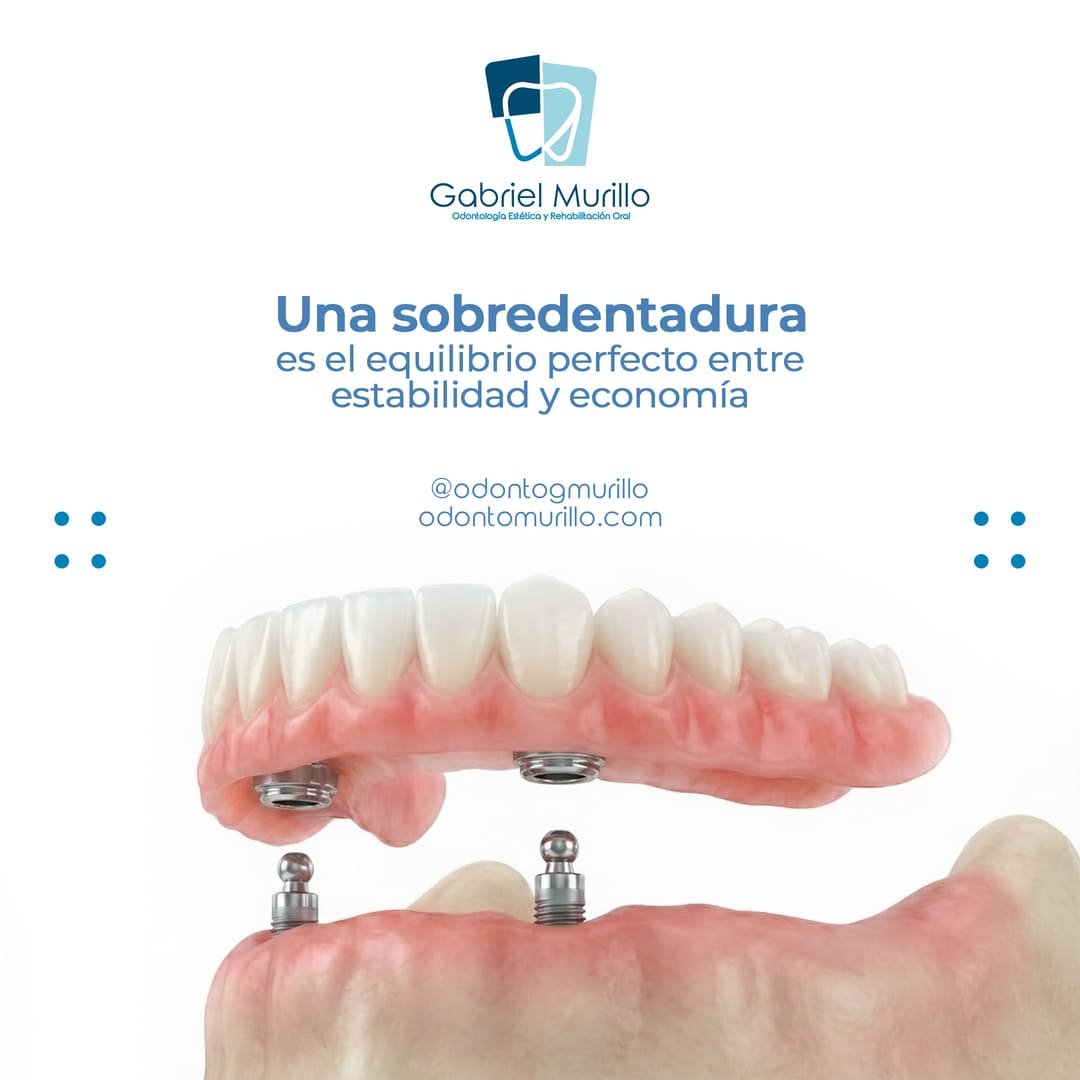
The Overdenture is the perfect balance between stability and affordability. It is a technique that combines the security of dental implants with the versatility of a removable prosthesis, offering you a radically superior quality of life without the need to invest in a complete fixed rehabilitation.
Does your prosthesis move when you speak?
The main problem with a traditional lower complete denture is that it has nothing to hold onto. It just “floats” on the gum. Over the years, the bone resorbs (shrinks), the gum flattens, and the prosthesis loses all its retention. It’s like trying to balance a plate on a wobbly table.
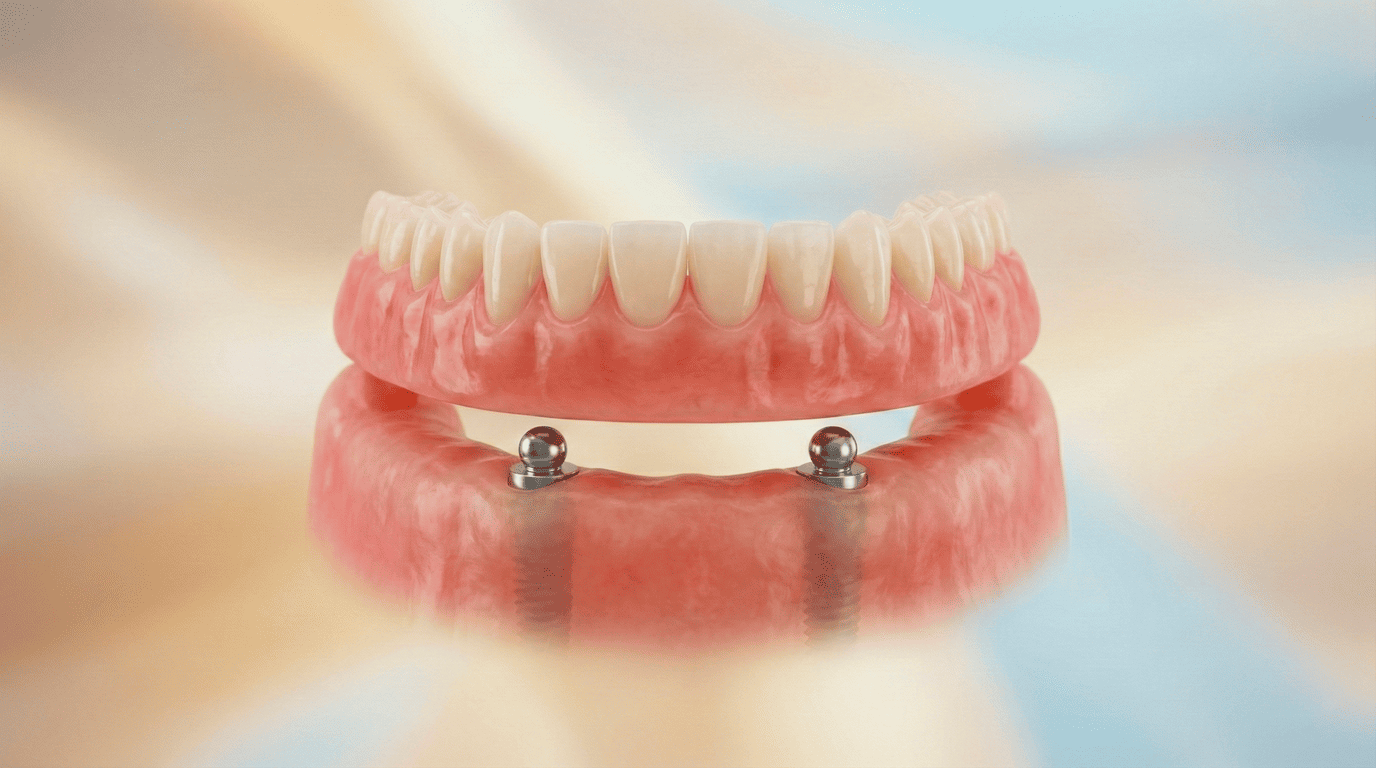
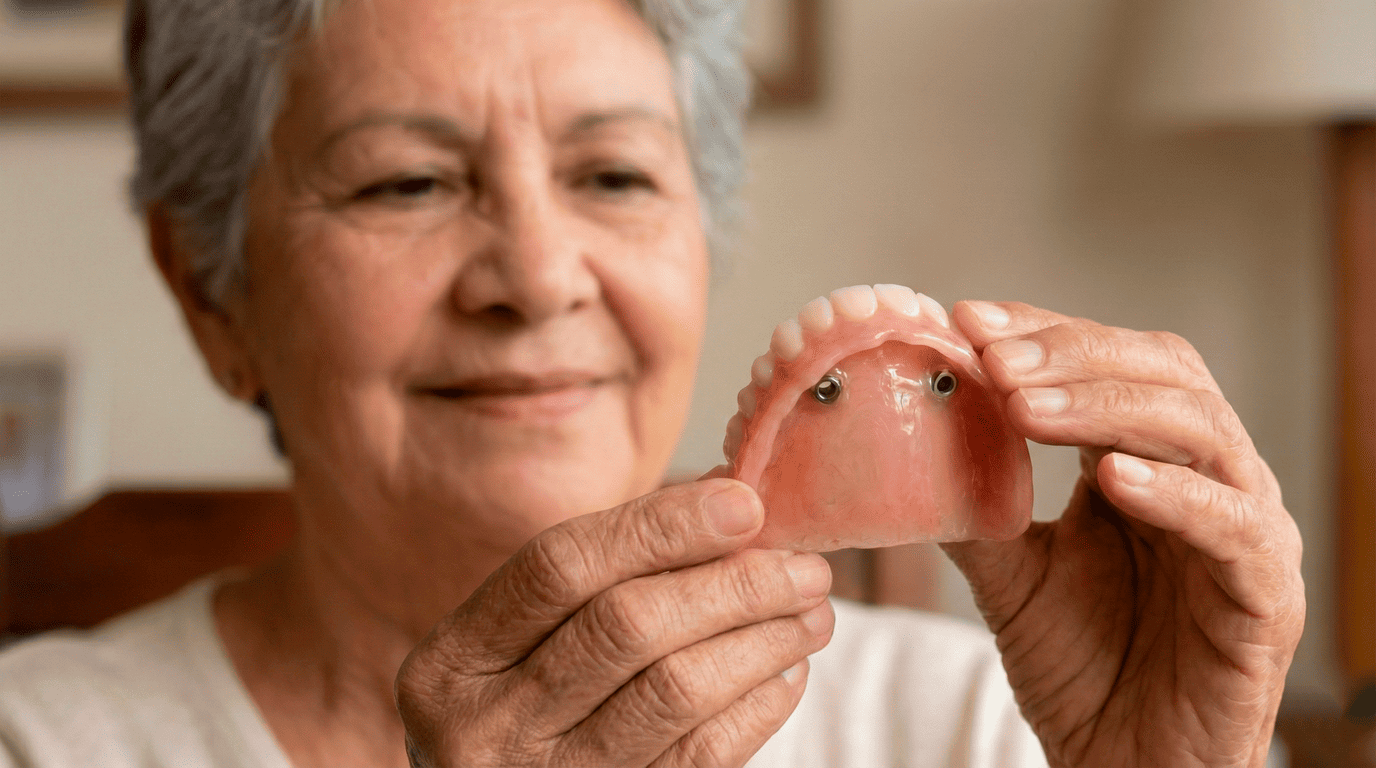
The Overdenture changes the rules of the game. Basically, it is a complete prosthesis that, instead of resting only on your sore gum, anchors to a series of dental implants (usually 2, 3, or 4).
It is not fixed (you can take it out), but it isn’t loose either. Imagine the difference between wearing slip-on shoes that come off when you walk (conventional denture) and shoes with a safety clasp (overdenture). The clasp allows you to walk, run, and jump without the shoe coming off, but you can take it off when you get home to rest.
That is exactly what we achieve: mechanical retention. The prosthesis makes an audible “click” when put in place and stays firm. Say goodbye to adhesives and the fear of your teeth flying out.
How does an Overdenture work?
For the magic to happen, we need a mechanism that connects the implants (which are inside your bone) to the prosthesis. At Odontomurillo, we primarily use two retention systems, chosen based on the needs and dexterity of each patient:
Bar System (Greater stability)
It is the classic and extremely robust system.
- The implants are placed (usually 3 or 4).
- A polished metal bar is screwed onto them, joining all the implants together (splinting).
- This bar follows the curve of your jaw. Inside the prosthesis, a “clip” or “jumper” is placed that snaps perfectly over that bar.
Advantage: It offers incredible lateral stability. The prosthesis does not move side to side or up and down. Furthermore, the bar distributes the chewing force among all the implants, protecting the bone. It is ideal for patients who want the prosthesis to feel very firm.
Locator System (Easy-to-use clasps)
This is the most modern and popular system due to its simplicity and lower cost.
- The implants are placed (there can be as few as 2 in the lower jaw).
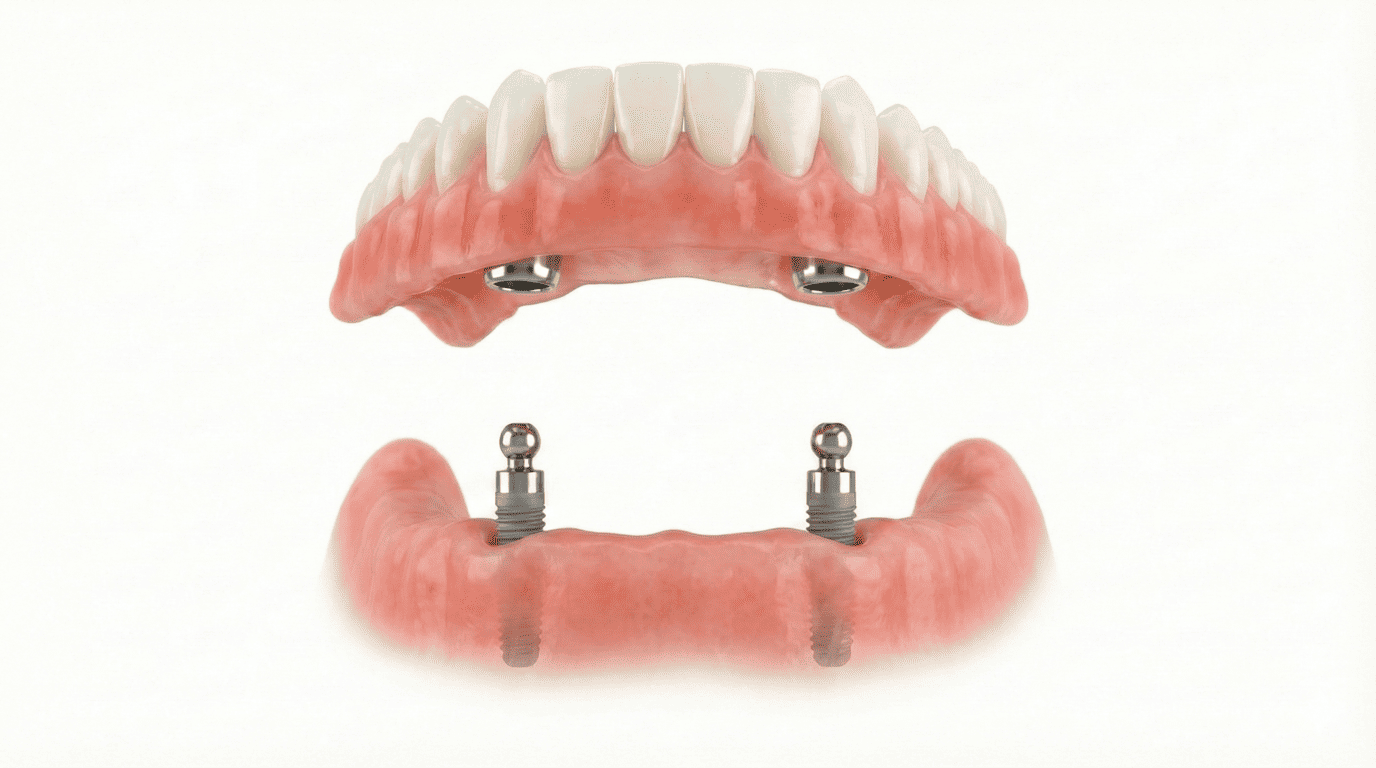
- An abutment called a Locator is screwed onto each implant. Imagine it’s like the “male” part of a snap button on a shirt.
- Small caps with retention rings (the “female” part) are placed inside the prosthesis.
Advantage: It is very easy to use. The patient just has to put the prosthesis in place, bite down gently, and… Click! The buttons snap together. To remove it, you apply a little force and it pops out. It is less bulky than the bar, easier to clean, and if the rubber rings wear out, they can be changed in 5 minutes at the office, making the prosthesis fit as tightly as the first day.
Main benefits of the overdenture
Why would you choose an overdenture instead of a fixed or conventional prosthesis? Here are the key reasons we explain to our patients in Armenia:
Easy hygiene (You can take it out to clean it)
For many patients, especially older adults or those with motor difficulties in their hands (such as arthritis), cleaning a screw-retained fixed prosthesis can be complicated. It requires using special dental floss, leaning over the mirror, and having a lot of dexterity.
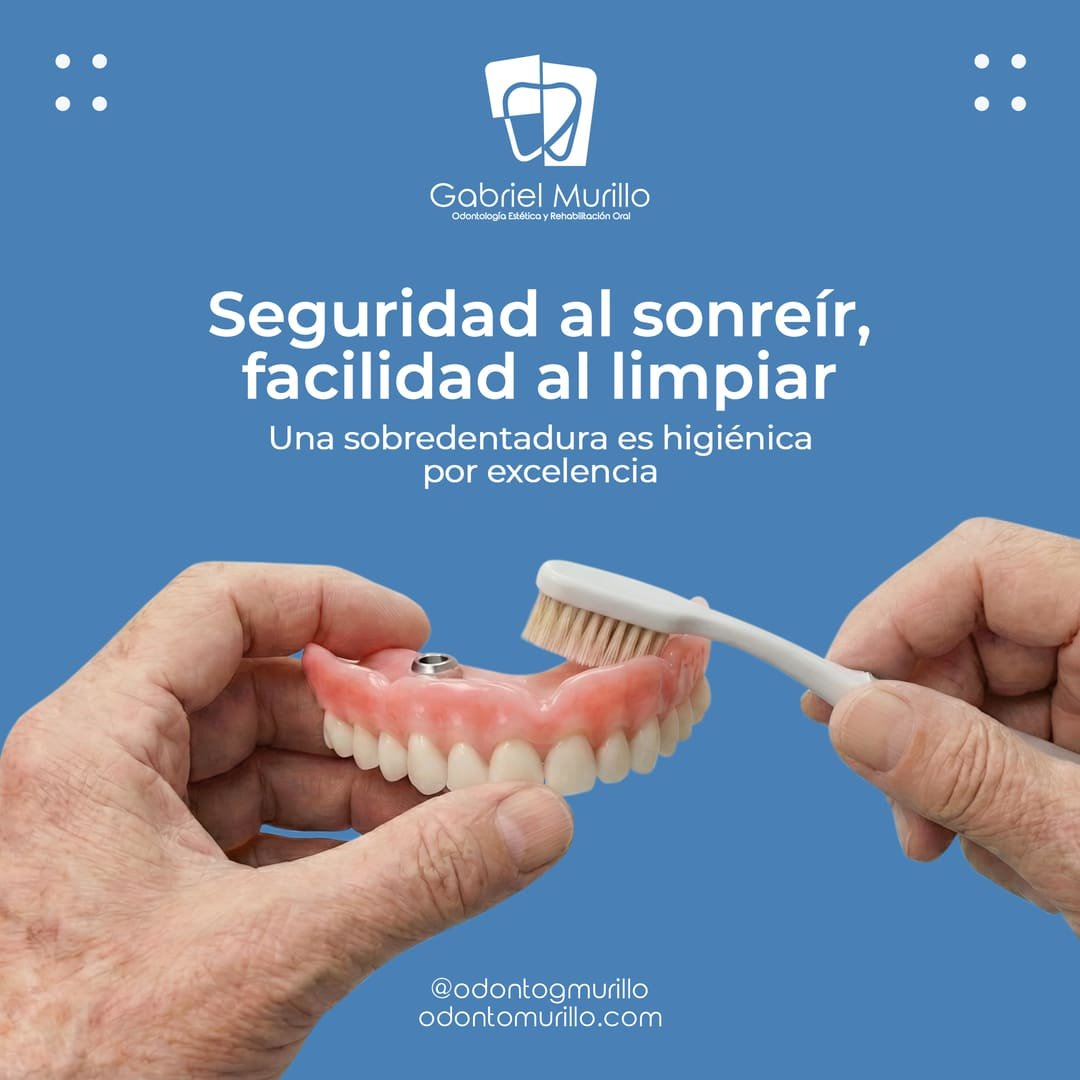
The overdenture is exceptionally hygienic.
- You take it out after eating.
- You brush it comfortably in your hand under the tap.
- You brush the clasps or the bar in your mouth (which is very easy because everything is accessible).
- And you put it back in. This drastically reduces the risk of infections, bad breath, or peri-implantitis (loss of implants due to bacteria).
Lower cost than a hybrid fixed prosthesis
This is where the overdenture shines. A fixed rehabilitation like an “All-on-4” requires more implants (a minimum of 4, sometimes 6), expensive prosthetic components, and a complex internal structure made of metal or zirconia. The overdenture:
Works well with fewer implants (sometimes only 2 in the lower jaw).
The prosthesis itself is made of reinforced acrylic, which is much cheaper to manufacture and repair than porcelain or zirconia.
Maintenance is affordable (changing the rubber rings on the clasps).
If you are on a tight budget but don’t want to give up the quality of life that implants offer, this is undoubtedly the option with the best cost-benefit ratio.
Who is this treatment for?
In our clinical experience with Dr. Gabriel Murillo, the overdenture is the “salvation” for very specific profiles:
The Patient with little bone: If you have lost a lot of bone and are not a candidate for fixed implants (or do not want to undergo complex bone grafts), the overdenture is usually viable because we can place the implants in the front area of the chin, where there is almost always bone remaining.
The Patient who has lost lip support: When a lot of bone and gum are lost, the lip sinks in a lot.
The overdenture has an acrylic flange that “fills in” that space, restoring facial aesthetics and eliminating wrinkles, which is sometimes difficult to achieve with fixed teeth alone.
Tight Budget: Those who want implants but cannot afford a complete fixed rehabilitation.
Hygiene Difficulties: Patients who do not feel capable of using water flossers and complex dental floss every day.
Regain your confidence to smile with Dr. Gabriel Murillo
Living worried about your teeth falling out is not a life. Dental technology has advanced enough so that no one has to go through that. At odontomurillo.com, we see the immediate transformation in our patients.
- The day we attach the clasps to their overdenture, their faces change.
- They go back to eating meat.
- They go back to speaking without covering their mouths.
And most importantly: they stop thinking about their teeth. If you are in Armenia or Quindío, we invite you to take the next step. You don’t need the most expensive surgery in the world to be happy again; sometimes, a smart, well-designed solution like an overdenture is all you need.
Frequently Asked Questions
Here we clarify common doubts about this system:
It is not mandatory, but it is highly recommended to take it out to sleep. Since it is removable, it is good to let your gums and tissues “breathe” during the night. In addition, this extends the lifespan of the clasps or clips, as it prevents nighttime bruxism (teeth grinding) from stressing the system.
Absolutely NOT! That is the big advantage. The retention is provided by the implants (the clasps or the bar). The prosthesis will not move. You can throw all those tubes of adhesive in the trash, which also means monthly financial savings.
For the lower jaw, 2 implants are often enough to achieve excellent stability using the Locator system. For the upper jaw, because the bone is softer, we usually recommend a minimum of 4 implants to ensure the system does not fail.
It depends. If your current denture is in very good condition, the teeth are not worn out, and it fits well aesthetically, we can sometimes “tune it up”: we drill some holes, secure the clasps, and convert it into an overdenture. However, it is usually ideal to make a new one with an internal metal reinforcement so that it does not break right where the clasps are located.
At first, the clasps may be a bit stiff and your gums sensitive after surgery. This is normal. As the days pass, you will learn the “trick” to easily and painlessly insert and remove the prosthesis. If any spot bothers you, Dr. Murillo will adjust it in seconds.
The “female” parts (rubber rings) inside the prosthesis undergo wear and tear from use (putting it in and taking it out). Generally, they need to be replaced every 6 to 12 months. It is a very quick and affordable procedure that we do at the clinic. You will know it is time to change them when you notice the prosthesis slides in too smoothly and does not “click”.
A great advantage of the upper overdenture supported by 4 implants is that, in many cases, we can trim back the palate. Unlike a complete set of false teeth that covers the entire roof of your mouth, the overdenture can be shaped like a horseshoe (palate-free), allowing you to regain the taste and temperature sensation of your food.
Although every case varies, an overdenture can cost approximately 40% to 50% less than a complete fixed hybrid prosthesis. This is because it requires fewer implants, less laboratory time, and materials that are easier to work with, without sacrificing chewing function.
The stability you are looking for is within your reach. Schedule your appointment at Odontomurillo and discover how an overdenture can change your life without breaking the bank.